Good lighting changes how a home feels and how comfortably it works. It can make a kitchen easier to use, improve visibility on stairs, create a calmer bedroom and help outdoor areas feel safer after dark. An LED lighting upgrade is not simply a matter of replacing old globes with newer ones. The best results come from looking at how each room is used, where light is needed and whether the existing fittings, switches and controls are still suitable.
i-ELEC provides LED lighting upgrades across Sydney for homes, apartments, strata properties and commercial spaces. The approach is practical and considered: understand what is not working, explain the available options clearly and install lighting that suits the space rather than adding brightness for its own sake.
What is included in an LED lighting upgrade?
An LED lighting upgrade may be as straightforward as replacing compatible lamps, or it may involve new downlights, pendants, wall lights, strip lighting, outdoor fittings, dimmers, sensors or smart controls. In older properties, an electrician may also need to assess the condition of existing fittings, transformers, cabling and switches before recommending the most suitable solution.
Homes with a mixture of halogen downlights, compact fluorescents and early LEDs can develop uneven colour, inconsistent brightness, flickering or frequent failures. The work can focus on one problem area or form part of a renovation or whole-home improvement.
Why replace older lighting with LEDs?
LED lighting generally uses considerably less electricity than traditional halogen lighting and lasts much longer under normal operating conditions. It also produces less wasted heat, which is particularly noticeable in homes with many recessed downlights. For frequently used areas, this can reduce energy use and the inconvenience of regularly replacing failed globes.
Efficiency is only one part of the decision. Modern LED fittings are available in different brightness levels, beam angles, colour temperatures and styles. This makes it possible to improve the quality of light as well as reduce energy consumption.
A successful LED upgrade is about comfort, not maximum brightness. The aim is to put the right amount of light in the right place, with controls that make the space easy to use throughout the day.
Planning light for the way you use each room
One lighting layout rarely works equally well everywhere. A kitchen needs strong, well-positioned task lighting, while a living room usually benefits from softer layers that can change for conversation, television or reading. Bedrooms need practical general lighting without feeling harsh, and bathrooms require suitable fittings for the location as well as clear illumination around mirrors and wet areas.
Fitting positions should take account of ceiling height, natural light, finishes, furniture, cupboards, benches and mirrors. These details affect where light falls and whether it creates useful illumination or unwanted glare.
Kitchens and dining areas
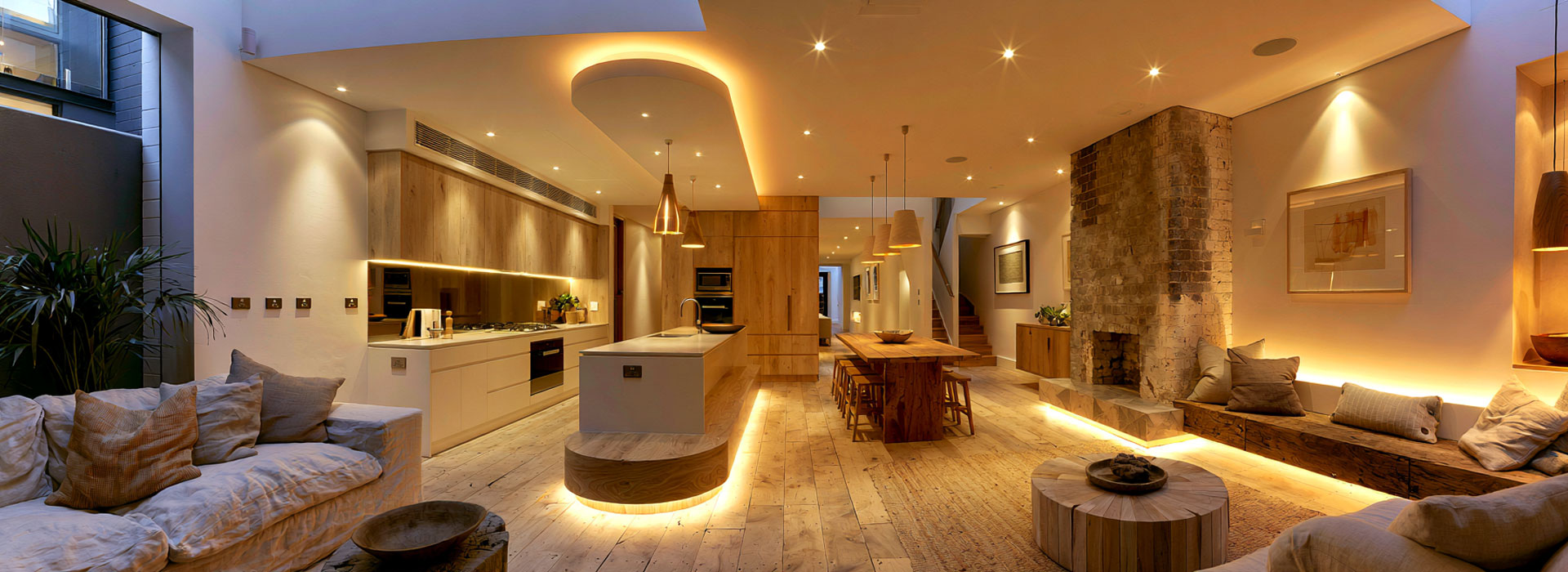
Kitchens often need several types of light working together. Ceiling lighting provides general visibility, while under-cabinet or integrated strip lighting can illuminate benchtops without creating shadows from the person preparing food. Pendant lights may help define an island or dining table, but they should be positioned at a practical height and balanced with the rest of the room.
Reusing existing downlight holes is convenient, but the original layout may cast shadows over work surfaces. The positions can be reviewed and supplemented with task lighting where needed.
Living rooms and bedrooms
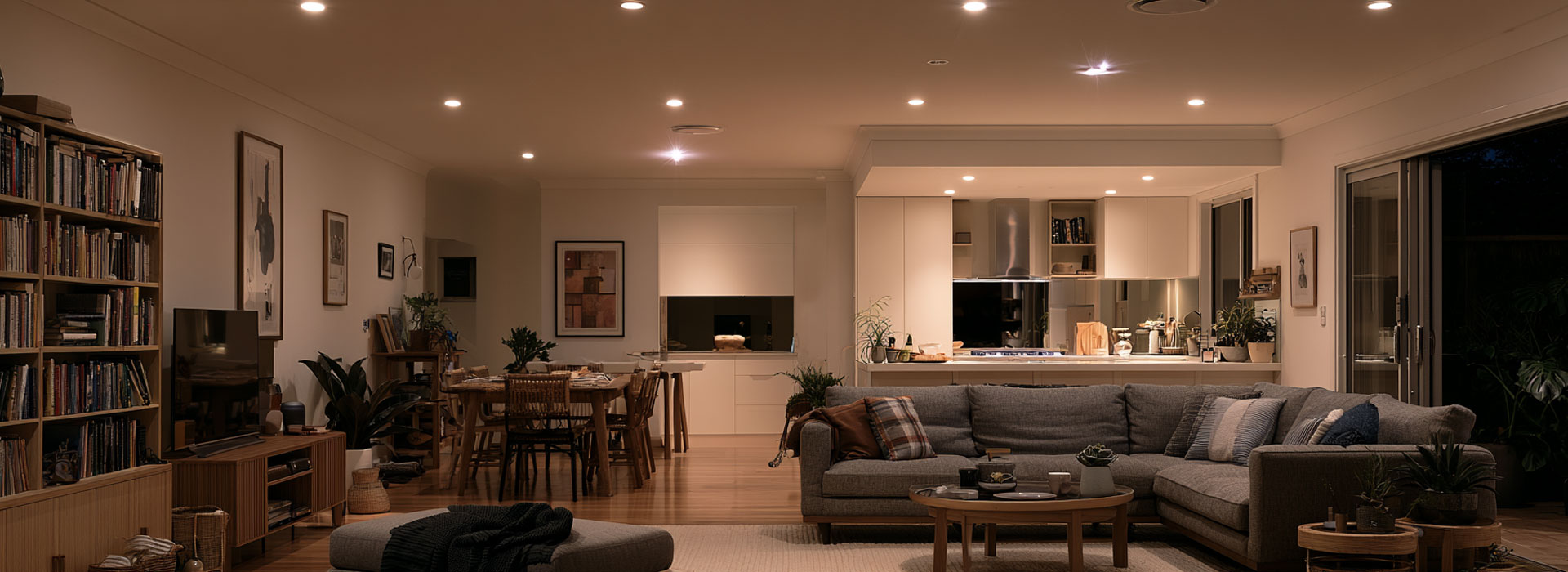
Living areas are more comfortable when lighting can change from bright general illumination to a softer evening setting. Dimmable downlights, wall lights and accent lighting can provide that flexibility. In bedrooms, well-controlled warm light can reduce glare while still serving wardrobes, reading and everyday tasks.
Bathrooms, hallways and stairs
Bathrooms need fittings suited to their location and even light around mirrors. Hallways and stairs require dependable visibility, with sensors, low-level lighting or two-way switching sometimes making these areas easier to use at night.
Outdoor areas
LED lighting can improve entrances, pathways, balconies, courtyards and entertaining areas. Outdoor fittings need to suit their exposure to weather and the specific installation location. Bright floodlighting is not always the most useful approach. Carefully placed wall, step, garden or eave lighting can improve visibility while reducing glare into windows and neighbouring properties.
Choosing brightness, colour and beam angle
LEDs are better compared by light output than wattage alone. Wattage describes power use, while lumens describe visible light, so the choice should be based on the room and intended use.
Colour temperature also affects how a space feels. Warm white light creates a softer appearance that is often preferred in bedrooms and living spaces. Neutral or cooler white light can feel clearer in kitchens, laundries, garages and work areas, although very cool lighting may feel clinical in a home. Consistency matters. Mixing noticeably different colour temperatures in an open-plan area can make the lighting look unplanned.
Beam angle determines how widely the light spreads. A narrow beam can highlight artwork or a feature, while a wider beam is often more suitable for general illumination. The spacing and ceiling height need to be considered together so the room does not develop bright spots and dark gaps.
Why LED quality matters
LED products vary considerably. A low-cost fitting may look acceptable when first installed but provide inconsistent colour, poor dimming, visible flicker or a shorter useful life. The driver, which regulates power to the LED, is an important part of the fitting and is often where quality differences become apparent.
Useful considerations include colour consistency, operating life, warranty support, dimmer compatibility and colour rendering. i-ELEC can narrow down the choices and recommend fittings that suit the room, electrical system and budget.
Dimming and control options
Dimming can make LED lighting much more flexible, but the lamp, driver and dimmer must work together. An older dimmer designed for halogen lighting may cause an LED to flicker, buzz, switch off before reaching a low level or behave differently when several fittings are connected. In some cases, replacing the dimmer is as important as replacing the lights.
Controls may include wall dimmers, multi-way switching, sensors, timers and smart systems. Smart lighting should solve a genuine need, while ordinary wall controls should remain straightforward for everyone to use.
Flickering after an LED change is not something you should have to accept. It may indicate an incompatible lamp, driver or dimmer, a loose connection or another issue that should be assessed rather than ignored.
Replacing globes compared with replacing fittings
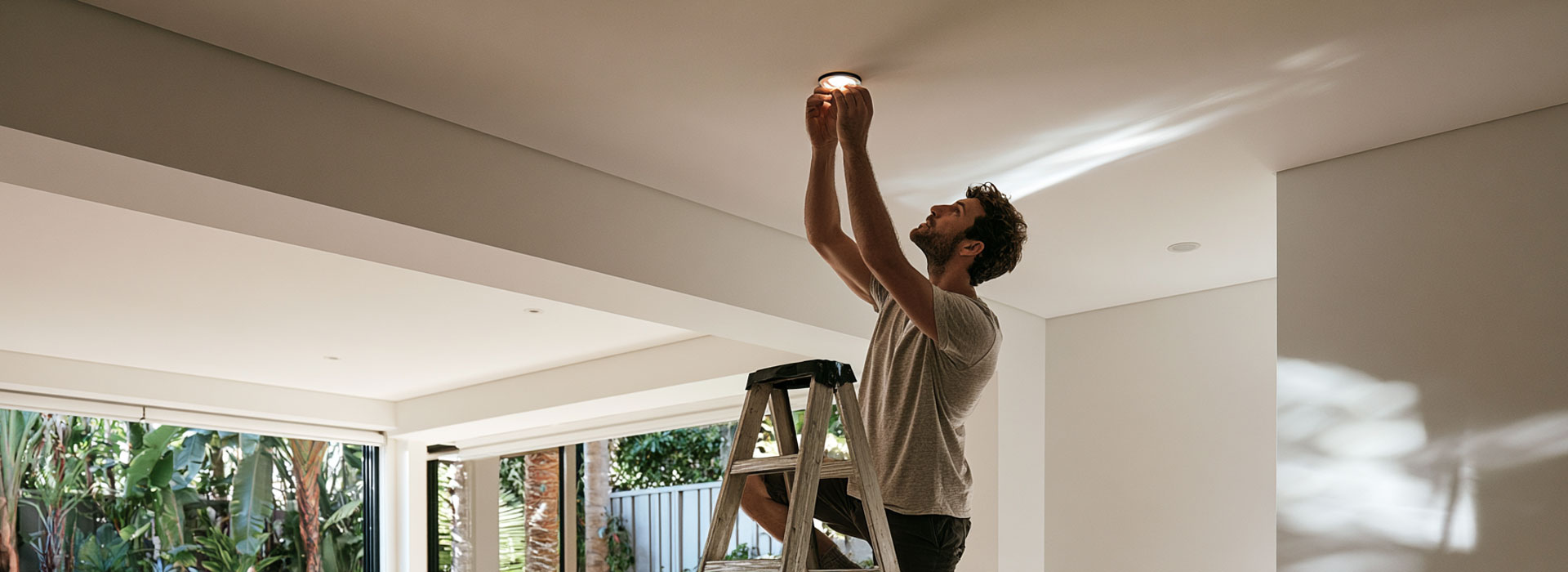
Some existing fittings can accept a suitable LED replacement lamp. This may be a practical option when the fitting is in good condition, the lamp is compatible and the result meets the needs of the room. Other situations benefit from replacing the complete fitting, particularly where old transformers are failing, heat-damaged components are present, the downlight is not suitable around insulation or the existing design produces poor light.
Integrated LED fittings can provide a clean appearance and controlled light distribution, while replaceable-lamp fittings may be simpler to maintain. An electrician can explain the practical trade-offs for the property.
Older homes, apartments and renovations
Sydney properties range from terraces and Federation homes to apartment buildings and newer developments. Access above ceilings, existing wiring routes, decorative plaster, concrete slabs and strata rules can all influence the installation method. A good lighting plan needs to respect the building rather than assume every ceiling can be treated in the same way.
In an older home, the upgrade may reveal ageing fittings, cabling or previous alterations that need attention. This does not automatically mean extensive rewiring, but the existing installation should be assessed before changes are made.
For apartments and strata properties, approval, access and responsibility for common property may need to be clarified before work begins. Clear communication with owners, tenants, strata managers or building managers helps reduce delays and disruption.
What happens during an LED lighting upgrade?
The process begins with the rooms involved, the problems with the current lighting and the result you want. Photos, plans or a walkthrough can help establish the scope and confirm fitting positions, switching and colour temperature before products are ordered.
During the work, existing fittings and controls are checked, power is safely isolated where required, and the new equipment is installed and tested. Where wiring work is carried out, it must be completed by a licensed electrician and the required compliance documentation should be provided.
Care inside the property matters. i-ELEC communicates clearly, protects work areas and leaves the space tidy. Any likely access holes, ceiling repairs or painting should be discussed before work begins.
What affects the cost?
Cost depends on the fittings, ceiling access, existing wiring, reuse or relocation of holes, switching points, dimming or smart controls, ceiling height and any testing or fault finding required. Clear information at the beginning makes it easier to compare practical options and avoid surprises.
LED upgrades for commercial and strata properties
LED upgrades can also improve offices, shops, common areas, car parks and managed properties. In these settings, the priorities often include dependable light levels, reduced maintenance, sensible energy use and minimal disruption to occupants or customers.
A staged upgrade may suit larger properties. Consistent products, clear documentation, organised access and advance communication can make future maintenance easier and reduce disruption.
Common questions about LED lighting upgrades
Can every halogen light be replaced with an LED?
Many can, but not every replacement is straightforward. The existing fitting, transformer, dimmer, ventilation and surrounding materials all need to be considered. A compatible LED lamp may solve the problem, while some installations are better upgraded with complete new fittings.
Will LED lights work with my current dimmer?
Sometimes, but compatibility cannot be assumed. Older dimmers may not operate correctly with the lower electrical load and electronic drivers used by LEDs. Matching the fittings and controls helps achieve smoother, quieter and more reliable dimming.
Which colour temperature should I choose?
There is no single correct choice. Warm white often suits living rooms and bedrooms, while neutral white may suit kitchens, bathrooms and work areas. The existing finishes, natural light and personal preference should guide the decision. Keeping connected spaces visually consistent is usually more important than following a rigid rule.
Do I need to replace all the lights at once?
No. A room-by-room or staged approach can work well, especially when the current fittings are a mixture of ages and types. It helps to plan the intended final result so new products are compatible and the lighting remains consistent as later stages are completed.
Can LED lighting be added during a renovation?
Yes. Renovation work is a good opportunity to review fitting locations, switching, task lighting and future controls before walls and ceilings are closed. Early coordination with the builder, designer or cabinetmaker can improve the result and reduce avoidable changes later.
Plan an LED lighting upgrade that suits your space
Tell the i-ELEC team which rooms you would like to improve, what you dislike about the current lighting and whether you are considering new fittings, dimming, feature lighting or a full layout change. Photos, plans and any preferred styles are helpful, and the team can guide you through the practical options in a clear and reassuring way.