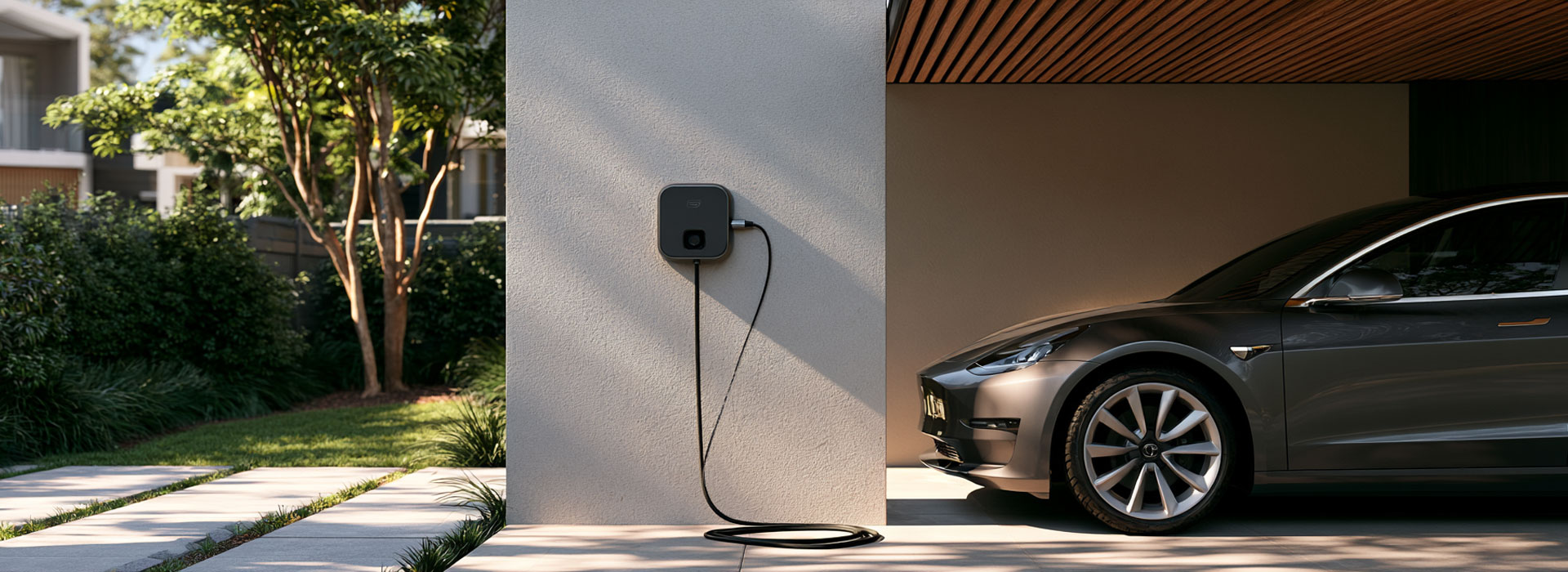
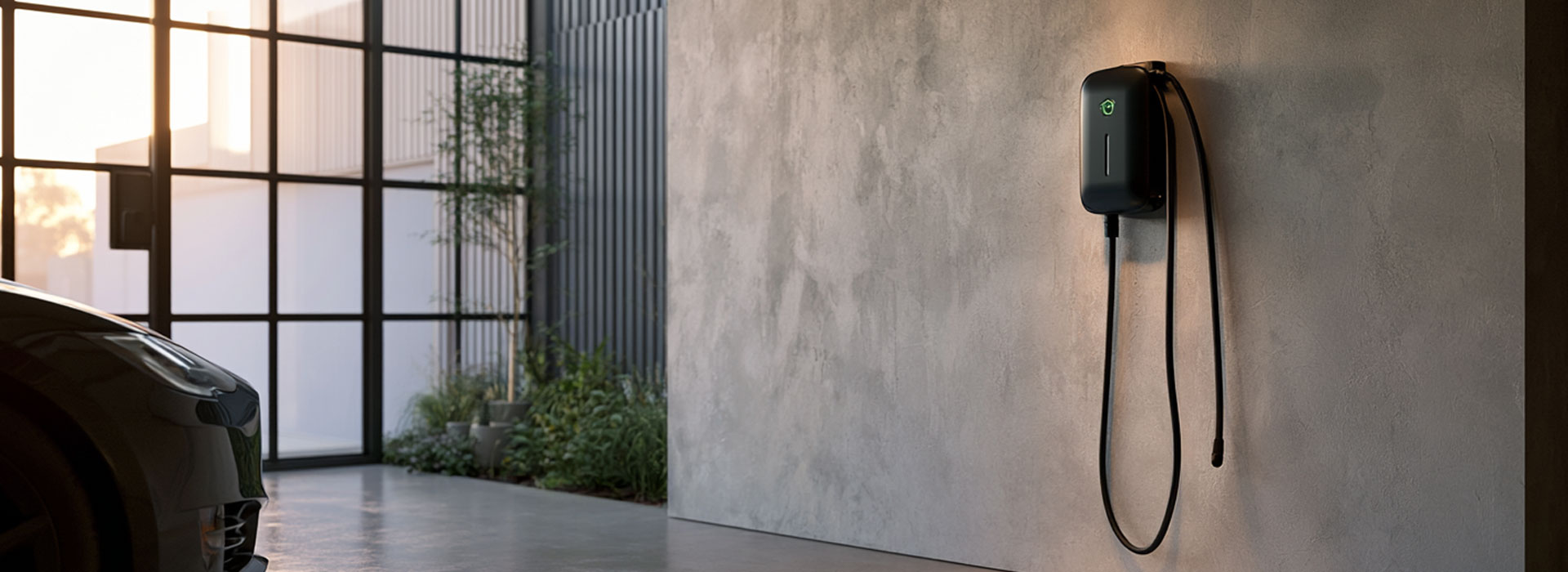
Charging an electric vehicle at home can make everyday driving simpler, but the charger itself is only one part of the installation. A safe and practical EV charging setup also depends on your vehicle, the electrical capacity of the property, the condition of the switchboard, where the car is parked and how you want to manage charging.
i-ELEC provides EV charger installation across Sydney for houses, townhouses, apartment buildings and commercial properties. Our approach is to assess the whole installation before recommending a solution. That means looking beyond the wallbox to make sure the charger is suitable for the property, positioned conveniently and installed with the correct electrical protection.
Why install a dedicated EV charger at home?
Many electric vehicles include a portable charging cable that can connect to a suitable household power point. This can be useful for occasional or slower charging, but it may not suit every home, vehicle or driving routine. Electric vehicle charging places a sustained load on an electrical circuit, often for several hours, so the condition and suitability of the outlet and circuit matter.
A dedicated home EV charger, often called a wallbox or Level 2 charger, is designed specifically for regular vehicle charging. It is hardwired to a dedicated circuit and can generally charge faster than a standard power point. Depending on the model, it may also offer scheduling, energy monitoring, solar integration, access control and dynamic load management. For many homeowners, this makes charging more convenient and easier to manage at home.
The right charger is not always the most powerful charger. The best choice depends on how far you drive, how long the vehicle is usually parked, what charging rate the vehicle can accept and how much electrical capacity is available at the property.
Choosing the right EV charger
Dedicated AC home chargers are commonly available in a range of power ratings. A typical residential charger may be configured around 7 kW, while higher-capacity options may be available where the property has a suitable three-phase supply. The maximum charging speed is also limited by the vehicle’s onboard AC charger, so installing a higher-rated wallbox does not automatically mean every vehicle will charge at that full rate.
Charger selection should begin with practical questions. How many kilometres do you usually drive each day? Will the vehicle normally remain parked overnight? Do you have one EV or expect to add another? Does the home have solar panels, a battery or major electrical loads such as air conditioning, pool equipment or an induction cooktop? These factors help determine whether you need faster charging, smart controls or load management.
Connector compatibility also needs to be checked against the vehicle specifications. Chargers may have a permanently attached cable or an untethered socket that allows the cable to be removed. A tethered charger is convenient for regular use, while an untethered unit can look tidier when not in use and may offer more flexibility if different vehicles will share it.
What an electrician checks before installation
Before an EV charger is installed, the electrician needs to understand both the proposed charger and the electrical system supplying it. This assessment helps identify whether the installation can proceed using the existing infrastructure or whether other work should be considered.
Switchboard condition and available capacity
The switchboard is one of the first areas to inspect. An EV charger can be one of the larger continuous electrical loads in a home, so available capacity cannot be judged only by whether there is space for another circuit breaker. The assessment should consider the property’s supply, existing circuits, protective devices and the combined demand from other appliances.
Some homes may be ready for a charger with relatively straightforward electrical work. Others may need a switchboard upgrade, additional protection, circuit rearrangement or changes to the property’s electricity supply. Where a supply upgrade or network approval is required, this should be identified before the charger installation is finalised.
Cable route and charger position
The distance between the switchboard and the parking area can have a significant effect on the installation. Cable may need to pass through ceiling spaces, wall cavities, garages, external areas or shared property. The route must be suitable for the required cable size and protected from damage, heat and weather.
The charger should be positioned where the vehicle can connect comfortably without stretching the cable across a walkway or creating a trip hazard. The location also needs to suit the vehicle’s charge-port position, the direction it is normally parked and the length of the charging lead. Outdoor equipment and its mounting position must be suitable for the level of weather exposure.
Wi-Fi, data and smart features
Smart chargers may rely on Wi-Fi, mobile data, Ethernet or a separate energy meter for app control, usage records, remote updates and energy management. It is worth checking connectivity at the intended charger position, particularly in an enclosed garage or basement car park where the signal may be weaker than it is inside the home.
Smart charging, solar and household electricity use
Charging an EV does not always need to begin the moment the cable is connected. Many chargers and vehicles allow charging to be scheduled for times that better suit the household, the electricity tariff or solar generation.
If your home has rooftop solar, daytime charging may allow more of the vehicle’s energy to come from electricity generated at the property. Some compatible smart chargers can monitor solar production and adjust charging to use surplus generation. The result depends on the solar system, charger, metering arrangement, vehicle and other household loads, so compatibility should be checked rather than assumed.
Homes without solar may still benefit from scheduled charging. Depending on your electricity plan, charging outside peak periods may cost less. Tariffs vary, but choosing equipment with reliable scheduling and monitoring can make it easier to manage when energy is used.
What is dynamic load management?
Dynamic load management allows a compatible charger to adjust its charging rate in response to the electricity being used elsewhere in the property. It may reduce demand while several large appliances are running and increase it again when household demand falls.
This can be useful where the property has limited spare capacity or where a charger would otherwise compete with major loads. It does not replace a proper electrical assessment, but it may help create a practical charging solution without assuming that the fastest possible fixed charging rate is required.
Planning for future electrical use can save unnecessary rework. Tell your electrician if you are considering solar, a home battery, induction cooking, additional air conditioning or a second electric vehicle, even if those changes are not happening immediately.
EV charger installation in apartments and strata buildings
Installing an EV charger in an apartment building is usually more involved than installing one in a freestanding house. The parking space may be far from the apartment meter, electrical infrastructure may be shared and cabling may need to pass through common property. The building also needs a fair and manageable approach to electricity use, billing, maintenance and future charger requests.
In NSW, owners should contact the owners corporation, strata committee, strata manager or building manager before connecting EV charging equipment. Tenants will generally need to raise the request through the property owner or managing agent. Approval, proposed cable routes, metering, common-property access and responsibility for ongoing costs should be addressed before work begins.
For a building with only one or two early requests, an individual connection may sometimes be practical. In other buildings, a shared charging point, staged EV charging backbone or whole-building system may be more appropriate. A broader approach can make future installations easier and can support load control and electricity cost recovery as the number of EVs increases.
i-ELEC works with homeowners, strata managers, building managers and property managers to help clarify the electrical side of a proposed installation. Clear documentation and communication are especially important in shared buildings, where several parties may need to understand the route, connection point, equipment and responsibilities before approving the work.
EV charging for workplaces and commercial properties
Commercial EV charger installation requires a different set of questions. A workplace may be charging staff, fleet or customer vehicles, each with different parking times and charging needs. The site may also require access controls, consumption records, billing or capacity for more chargers later. The electrical design should consider expected growth, the building’s peak demand and whether staged distribution, cable pathways or load management will make future expansion easier.
What affects the cost of an EV charger installation?
There is no reliable single installation price because properties vary considerably. Labour and materials are affected by the charger selected, distance from the switchboard, cable size, access, wall construction, weather protection, switchboard condition and whether trenching, conduit or other building work is required. Smart energy management, solar integration, three-phase work, supply upgrades, strata requirements and network applications can also change the scope.
A useful quotation should make the proposed work understandable. It should identify the charger or installation assumptions, intended location, electrical work included and any known exclusions or additional steps. Where something cannot be confirmed until the property is inspected, that uncertainty should be explained rather than hidden.
What happens during an i-ELEC EV charger installation?
The process begins by gathering information about the property, vehicle and preferred charger. Photos of the switchboard, meter area, proposed charger location and the path between them can be helpful for an initial discussion, although an on-site assessment may still be needed. Once the requirements are understood, i-ELEC can explain the practical options and any related electrical work.
The installation is planned to minimise unnecessary disruption and keep cabling and equipment as neat as the property allows. The charger circuit and protective devices are installed, the equipment is connected and the completed work is tested. Where the charger includes an app or scheduling functions, basic setup can also be checked so that the owner understands how to begin using it.
Why careful installation matters
An EV charger is expected to operate regularly and for long periods, often while the household is asleep or occupied with other things. That makes correct equipment selection, circuit design, protection and testing particularly important. It is not an appliance that should be chosen only by appearance or advertised charging speed.
A careful installer should also respect the property. That includes discussing cable routes before work starts, protecting nearby surfaces, keeping the work area organised and explaining any decisions that affect cost or appearance. For i-ELEC, good customer service is part of the electrical work, not an extra added at the end.
Planning an EV charger for your Sydney property?
Tell us the make and model of your vehicle, the charger you have purchased or are considering, your suburb, where the vehicle is parked and whether the property has solar, three-phase power or strata management. Photos of the switchboard, meter and proposed charger location can also help the i-ELEC team understand what may be involved and advise on the next step.