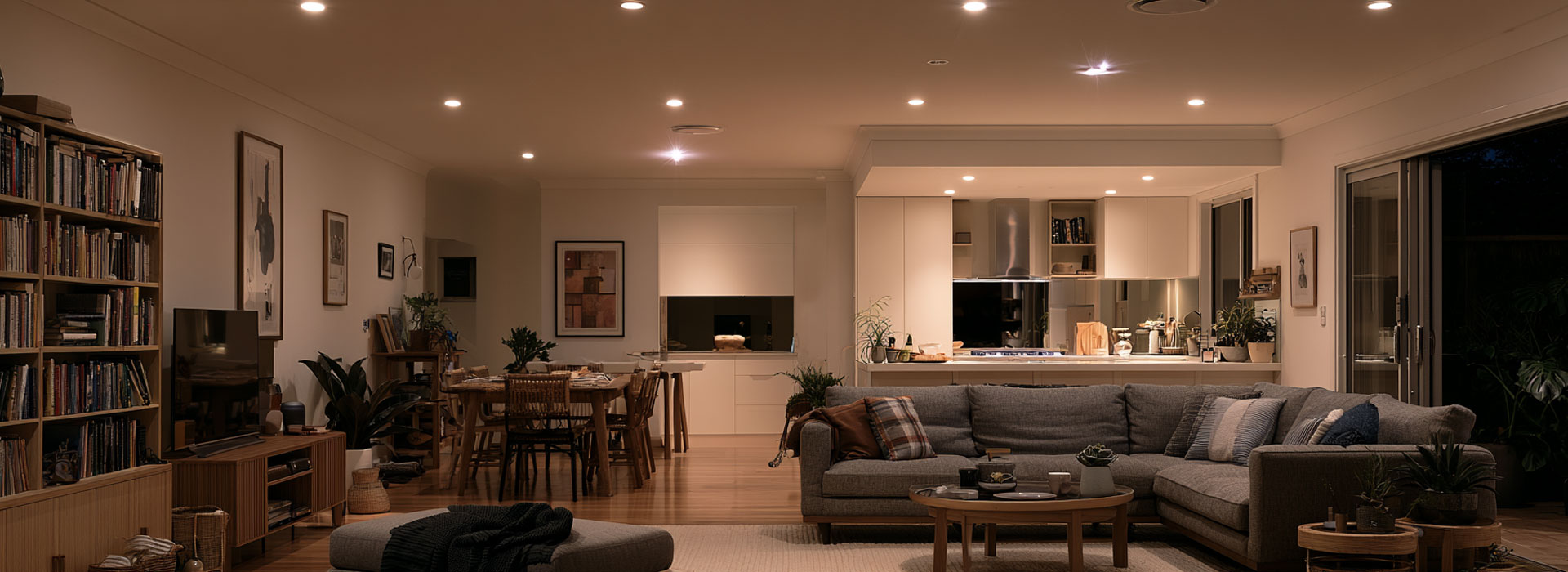
Good lighting does more than help you see clearly. It affects how comfortable a room feels, how easily you can complete everyday tasks and how the different areas of your home work together. Thoughtfully planned lighting can make a kitchen easier to use, give a living room more warmth, improve visibility in hallways and create a more welcoming atmosphere throughout the property.
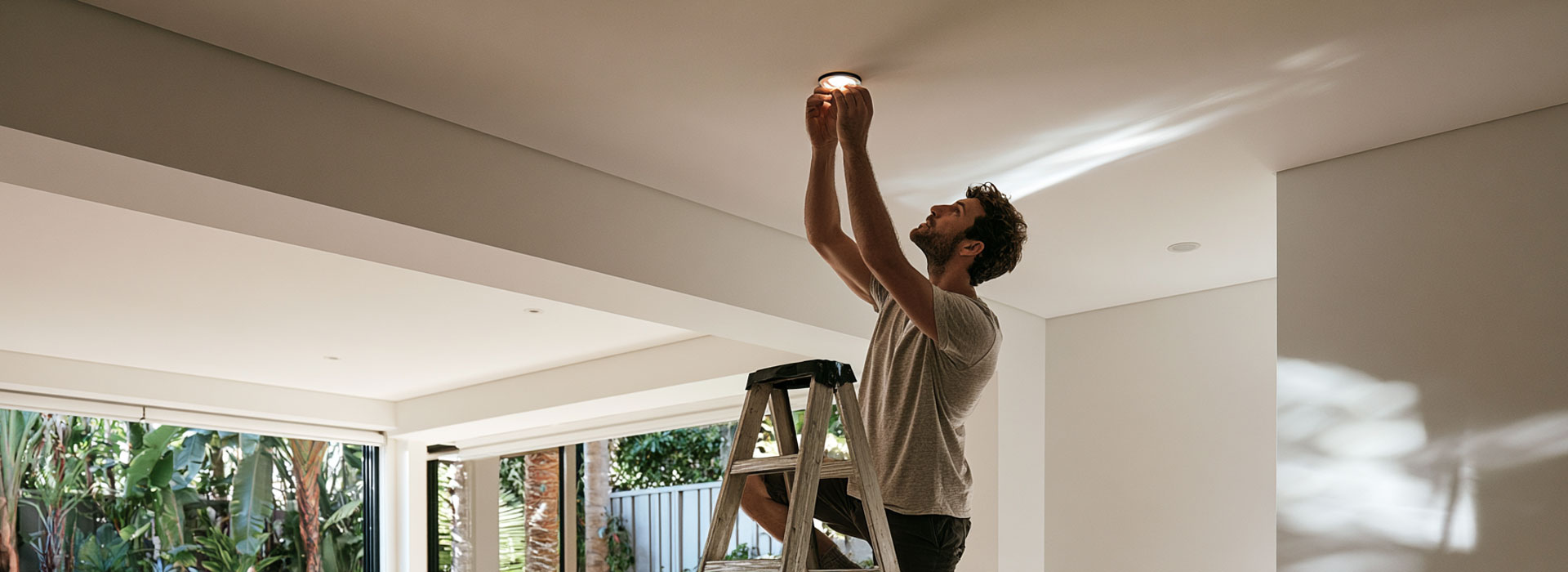
i-ELEC provides professional lighting installation across Sydney for homes, apartments, renovations, strata properties and commercial spaces. Whether you are replacing an outdated light fitting, installing new LED downlights or planning the lighting for an entire renovation, the work is approached with careful planning, clear communication and respect for your property.
Every space is different. Rather than simply adding more lights, the aim is to understand how you use the room and recommend a practical combination of fittings, placement and controls.
Lighting Designed Around How You Use the Space
The right lighting arrangement depends on the room, its layout and what happens there. A kitchen needs clear task lighting over preparation areas, while a living room may benefit from softer lighting that can be adjusted at different times of day. Bedrooms, bathrooms, stairways, home offices and outdoor areas each have their own practical requirements.
A well-planned lighting installation will often combine several types of light:
General Lighting
General or ambient lighting provides the main level of illumination in a room. This may come from LED downlights, ceiling-mounted fittings, pendants or other fixtures positioned to provide balanced coverage.
Task Lighting
Task lighting provides additional visibility where detailed activities take place. Common examples include lighting above kitchen benchtops, bathroom mirrors, desks, reading areas, workbenches and wardrobes.
Feature and Accent Lighting
Feature lighting can draw attention to artwork, joinery, architectural details or landscaping. It can also help create depth and atmosphere without relying on one bright central light.
Good lighting is not simply about making a room brighter. Placement, beam direction, colour temperature and control are often just as important as the number of fittings installed.
Residential Lighting Installation
Lighting can be improved as part of a major renovation, but it can also be upgraded room by room. Replacing an unsuitable fitting, adding better task lighting or changing how a group of lights is controlled can make a noticeable difference without requiring a complete redesign.
i-ELEC can assist with lighting installations throughout the home, including living areas, kitchens, bedrooms, bathrooms, hallways, stairways, laundries, garages, balconies, gardens and outdoor entertaining areas.
LED Downlight Installation
LED downlights are commonly used in Sydney homes because they provide a clean appearance and can offer efficient, reliable lighting when correctly selected and positioned. They are available in different brightness levels, beam angles, colour temperatures and styles.
Correct placement is important. Downlights positioned too far apart may leave dark areas, while installing too many can make a room feel harsh and increase unnecessary energy use. Ceiling height, room dimensions, furniture placement and the reflective qualities of walls and floors should all be considered.
When replacing older halogen downlights, the existing fittings, transformers, wiring and ceiling conditions may also need to be assessed. This helps identify whether a straightforward replacement is suitable or whether other components should be updated at the same time.
Pendant and Feature Light Installation
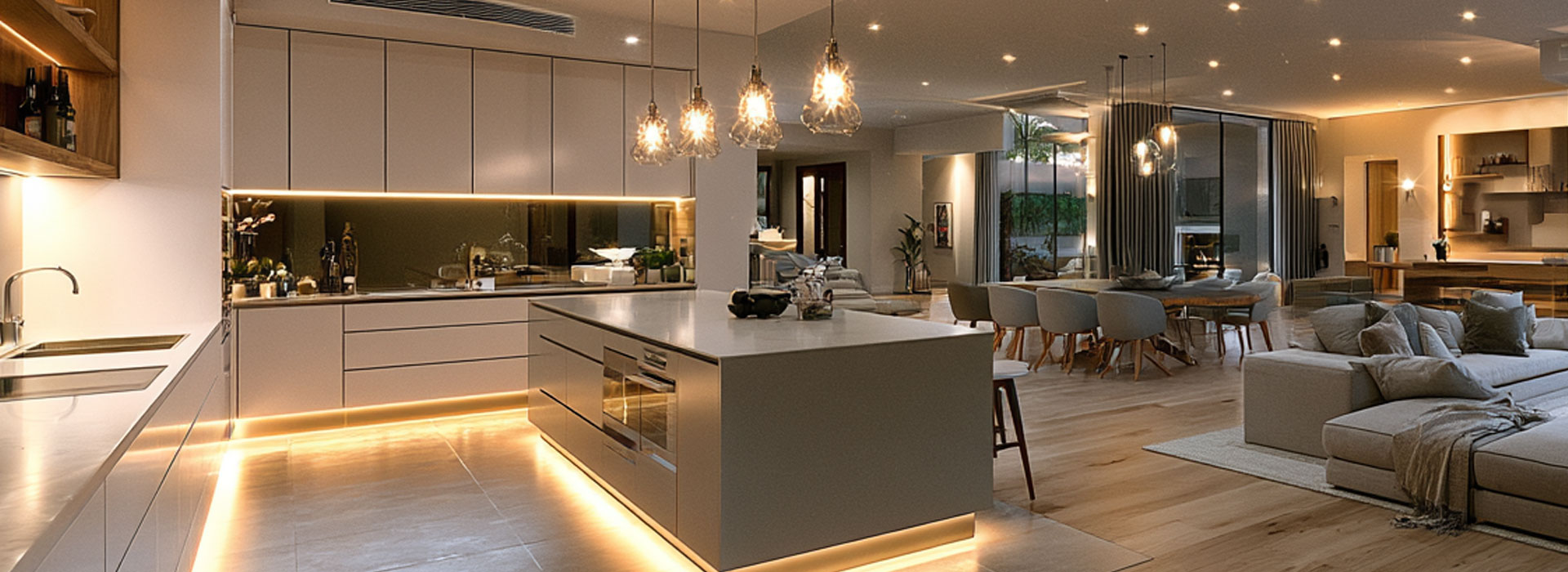
Pendant lights can provide practical illumination while adding character to a room. They are often installed above kitchen islands, dining tables, stairwells, entry areas and bedside tables.
The position and height of a pendant should be planned carefully. A fitting above a dining table needs to provide useful light without obstructing conversation or sightlines. Kitchen pendants should relate to the island, seating and surrounding downlights rather than being positioned only according to the centre of the ceiling.
Before installation, it is also important to consider the weight of the fitting, the available ceiling support and the location of existing wiring.
Kitchen Lighting
Kitchens usually require more than one source of light. General ceiling lighting may illuminate the room, but it can leave shadows on benchtops when someone is standing between the light and the work surface.
Task lighting beneath overhead cabinets, pendants above an island and carefully positioned downlights can make food preparation safer and more comfortable. Separate switching or dimming can also allow the kitchen to move from a bright working area to a softer evening space.
Bathroom Lighting
Bathroom lighting needs to balance visibility, comfort and suitability for the location. Clear lighting around the mirror can help with grooming, while softer general lighting may create a more relaxed atmosphere.
Because bathrooms contain water and moisture, fittings must be chosen carefully for where they will be installed. A licensed electrician can assess the proposed location and advise whether the fitting is appropriate for that part of the room.
Bedroom and Living Room Lighting
Bedrooms and living areas often benefit from lighting that can be adjusted rather than a single fixed level of brightness. Dimmable ceiling lights, wall lights, bedside pendants and switched lamp outlets can provide more flexibility.
In living rooms, lighting can be arranged around seating, television placement, artwork and circulation areas. This can reduce glare and create a more comfortable environment for reading, entertaining or relaxing.
Outdoor and Garden Lighting
Outdoor lighting can improve visibility around entrances, pathways, steps, driveways, balconies and entertaining areas. It may also help people move around the property more safely after dark.
Outdoor fittings need to be suitable for exposure to weather and installed with careful consideration of moisture, cable routes and mounting surfaces. Lighting should also be directed thoughtfully so that it serves its purpose without creating unnecessary glare for occupants or neighbouring properties.
Replacing Old or Unreliable Light Fittings
An older fitting may need attention if it flickers, buzzes, operates intermittently, produces excessive heat or no longer works reliably. Sometimes the fitting itself is the problem, but faults can also relate to the lamp, driver, transformer, dimmer, switch, connection or wiring.
Simply replacing the visible fitting may not resolve the underlying issue. An electrician can inspect the installation, identify the likely cause and explain what needs to be repaired or replaced.
This is particularly important when changing from older halogen or fluorescent lighting to LED fittings. Not every existing transformer or dimmer works properly with every LED product. Incompatible components can contribute to flickering, limited dimming range, delayed start-up or premature fitting failure.
Lighting Controls, Dimmers and Smart Lighting
The way lighting is controlled can be just as important as the fittings themselves. Separate switching allows different parts of a room to be used independently, while dimmers provide greater control over brightness and atmosphere.
Depending on the property and the selected fittings, lighting controls may include:
Standard wall switches: A simple and reliable option for individual lights or groups of fittings.
Two-way and multi-way switching: Useful for hallways, stairways, bedrooms and larger rooms where lights need to be controlled from more than one location.
Dimmers: Allow compatible lights to be adjusted for different activities and times of day.
Motion and occupancy sensors: Commonly used in entrances, hallways, garages, storage areas and some outdoor locations.
Timers and daylight sensors: Can automate selected outdoor, common-area or security lighting.
Smart lighting controls: May allow selected lights to be controlled through an app, schedule, voice assistant or broader home automation system.
Compatibility needs to be checked before installation, particularly when dimmers, smart controls and LED drivers are being combined. i-ELEC can discuss the available options and help you choose a system that suits how you want to use the space.
Planning Lighting for a Renovation
Lighting is most effective when it is planned early in a renovation rather than treated as a final decorative decision. The best location for a light often depends on cabinetry, furniture, ceiling details, artwork, appliances and how people will move through the room.
Early planning can help avoid downlights being positioned above cabinet doors, pendants missing the centre of an island or switches being installed behind furniture. It can also reduce the need for unnecessary ceiling repairs or changes after other finishes have been completed.
Before electrical work begins, it is helpful to consider:
Room layout: Where will furniture, cabinetry and major appliances be positioned?
Activities: Where will people prepare food, work, read, apply makeup or entertain guests?
Natural light: How does daylight enter the room, and how does the space change in the evening?
Ceiling construction: Is there suitable access for wiring and recessed fittings?
Switch locations: Where will controls be most convenient when entering, leaving or moving through the space?
Future flexibility: Would separate switching, dimming or smart controls make the space easier to adapt later?
Choosing the Right Colour Temperature
Colour temperature describes whether a light appears warmer and more golden or cooler and whiter. It can significantly affect how a room feels and how colours and materials appear.
Warm white lighting is commonly chosen for bedrooms, living rooms and dining areas because it tends to create a softer and more relaxed atmosphere. Neutral or cooler white lighting may be preferred in kitchens, laundries, garages, offices and other task-focused areas where clear visibility is important.
There is no single colour temperature that is right for every home. Existing finishes, natural light and personal preference should all be considered. Using noticeably different colour temperatures in the same open-plan space can sometimes look inconsistent, so it is worth reviewing the lighting as a complete arrangement.
What Affects the Cost of Lighting Installation?
The cost of installing lighting depends on more than the price of the fitting. Two lights that appear similar may require very different amounts of work depending on the property and the proposed location.
Factors that can affect the installation include the number and type of fittings, access above the ceiling, the condition of existing wiring, whether new cable routes are required, ceiling height, switching arrangements, dimmers, smart controls and the construction of the walls or ceiling.
Replacing an existing fitting in the same location is generally different from installing a completely new lighting point. New installations may require additional wiring, switching and access through finished surfaces.
Providing photographs, plans and information about the existing installation can help the i-ELEC team understand the project. For larger lighting upgrades or renovations, an on-site assessment may be needed before the full scope can be confirmed.
Planning a renovation? Finalise the lighting layout before ceilings, cabinetry and painting are completed. Early coordination can reduce changes, patching and awkward fitting positions later.
What to Expect During a Lighting Installation
Discussion and Assessment
The process begins with understanding what you want to improve. This may involve reviewing the room layout, existing lighting, preferred fittings and any problems you are trying to solve.
Practical Recommendations
Where appropriate, i-ELEC can discuss fitting locations, switching, dimming, colour temperature and other practical considerations. The aim is to provide clear information so that you can make an informed decision without being overwhelmed by unnecessary options.
Careful Installation
Electrical work is completed with attention to safety, access and the surrounding finishes. Where work is taking place in an occupied home, care is taken around furniture, flooring and completed surfaces.
Testing and Final Checks
Once installed, the lighting and controls are tested to confirm that they operate correctly. The electrician can also explain how any dimmers, sensors or smart controls should be used.
Care and Communication Inside Your Home
Inviting a tradesperson into your home requires trust. i-ELEC approaches residential electrical work with the same attention to communication and care as the technical installation itself.
This means discussing the work clearly, respecting the property, considering disruption and keeping you informed if something unexpected is discovered. Older homes and apartments can sometimes contain previous alterations, restricted ceiling access or wiring conditions that are not visible until work begins. When this happens, the issue should be explained before additional work proceeds.
The goal is not only to install the lights correctly, but to make the overall experience organised, professional and straightforward.
Lighting for Strata and Commercial Properties
i-ELEC also provides lighting installation and replacement for strata buildings, property managers and commercial clients across Sydney.
This may include common-area lighting, offices, retail spaces, corridors, stairwells, car parks, storage areas, outdoor areas and replacement of failed or outdated fittings.
For managed properties, reliable communication and documentation are particularly important. The work may need to be coordinated around tenants, building access, business operations or other contractors. Lighting upgrades can also be planned in stages to reduce disruption and help property managers prioritise the most important areas.
When Should You Contact an Electrician About a Light?
Contact a licensed electrician if a light fitting flickers repeatedly, makes unusual noises, smells hot, shows signs of discolouration, operates intermittently or causes a circuit to trip. Loose fittings, damaged switches and exposed electrical components should also be inspected.
Turn the light off and avoid touching or dismantling the fitting if you are concerned about its condition. Fixed wiring and hard-wired light fittings should not be altered as a do-it-yourself project.
Frequently Asked Questions About Lighting Installation
Can you install lights that I have already purchased?
In many cases, yes. The fitting will need to be suitable for the proposed location and compatible with the existing electrical installation. It is helpful to provide the product details before the appointment, particularly for large pendants, imported fittings, smart lights or specialised fixtures.
Can existing downlights be replaced with LED downlights?
Often they can, but the existing cut-out size, wiring, transformers, ceiling space and dimmer compatibility should be checked. An inspection can determine whether the fittings can be replaced directly or whether other components also need attention.
How many downlights does a room need?
There is no reliable one-size-fits-all number. The answer depends on the room dimensions, ceiling height, fitting output, beam angle, wall colours, furniture layout and the activities taking place in the room. A smaller number of well-positioned lights can sometimes perform better than a larger number installed without a plan.
Can you add a new light where there is no existing fitting?
This may be possible, depending on access for wiring and the construction of the ceiling or walls. The electrician will need to assess the proposed position and determine a suitable cable route and switching arrangement.
Can all LED lights be dimmed?
No. The fitting or lamp must be designed for dimming, and it needs to be compatible with the selected dimmer. Using incompatible products can result in flickering, buzzing or a poor dimming range.
Should I choose warm white or cool white lighting?
Warm white is often preferred in bedrooms and living areas, while neutral or cooler white may suit kitchens, workspaces and utility areas. The best choice depends on the room, its finishes and the atmosphere you want to create.
Can you install outdoor lighting?
Yes. Outdoor lighting can be installed for entrances, paths, balconies, gardens, entertaining areas and other suitable locations. The fitting and installation method must be appropriate for the level of exposure to weather and moisture.
Can lighting be connected to smart home controls?
Many lighting installations can incorporate smart switches, dimmers, sensors, schedules or broader automation. Compatibility, wireless coverage and the way the household wants to control the lights should be considered before products are selected.
Arrange Lighting Installation in Sydney
Whether you are improving one room, replacing unreliable fittings or planning lighting for a complete renovation, i-ELEC can help you work through the practical options.
Tell the i-ELEC team what you would like to change, where the work is located and whether you have already selected your fittings. Photographs, room dimensions or renovation plans can also help provide a clearer understanding of the project.